


12 Jan “Society Will Be My Patient”: UCLA Chancellor Julio Frenk Shares Global Health Journey with Executive MPH Students
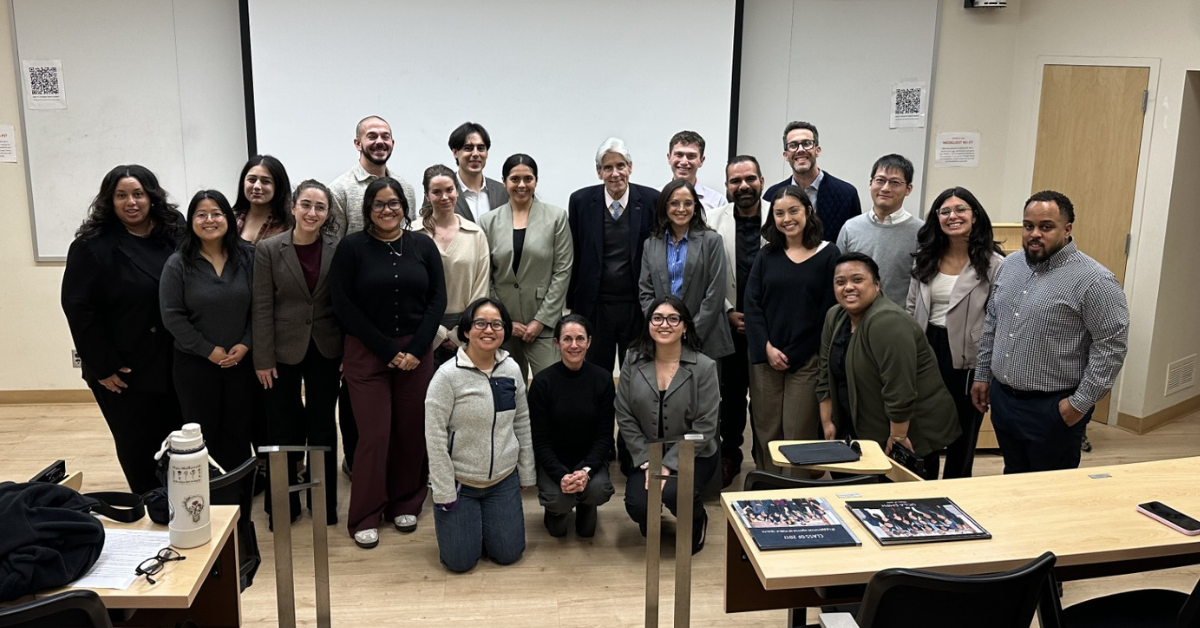
On Friday, January 9, 2026, UCLA Executive MPH students led a one-hour conversation with UCLA Chancellor Julio Frenk, exploring themes of UCLA pride, leadership, and the future of public health. Dr. Frenk became the seventh chancellor of UCLA on January 1, 2025, and holds an academic appointment as distinguished professor in our very own Department of Health Policy and Management within the UCLA Fielding School of Public Health. It was a unique opportunity for students to engage with UCLA leadership and connect with alumni and faculty in an inspiring setting.
Dr. Frenk shared the deeply personal “why” behind his career. He asked himself decades ago, “Why public health?” and came to the realization that it all started with the “generosity to strangers” his family experienced in Mexico. His father was just six years old when their family moved to Mexico to escape rising antisemitism in 1930’s Nazi Germany. The kindness and compassion his family experienced in Mexico saved his grandparents’ lives and made his own life a possibility.
A fourth-generation physician, Julio Frenk’s path was forever altered during a summer spent in a remote village in the mountains of Chiapas, an impoverished state in southern Mexico with a very high population of indigenous people.
While gathered around a fire with a famous anthropologist who was there doing research, an old indigenous woman covered in blood approached them, seeking help for a sick child accompanying her. This encounter with health disparities pushed him to choose a path of service. He decided then, “I am not just going to study people; I am going to serve people and go into medicine.”
While Dr. Frenk loved clinical work, he came to the realization that the scale of social inequality required a broader lens. He pursued public health with a motto that would define his tenure as the Minister of Health in Mexico and the Dean of the Harvard T.H. Chan School of Public Health: “Society will be my patient.”
This philosophy drove his most historic achievement: extending health insurance to 55 million people in Mexico. He reminded students that while he held political titles, including founding director-general of the National Institute of Health in Mexico, he was a “health professional in a political job,” not the other way around.
Addressing the EMPH cohorts, Dr. Frenk offered two primary lessons for navigating a high-level healthcare career. “Always be open to opportunity; do not have a rigid definition of your professional path, as opportunities emerge.” He said life is a river approaching a delta; you can take different branches of the delta, but it’s the same river.
“When thinking about what to do for your next position, figure out the area in which you need to acquire more knowledge,” he advised. “Then, do your very best.”
He also talked about the public health mindset. In leadership, don’t wait for things to happen. Use the public health tools of measurement and risk assessment to anticipate crises—from policy shifts to global pandemics.
Dr. Frenk opened it up to a Q&A session with the students toward the end of the evening. When asked about staying connected to his passion while managing administrative duties, Frenk spoke of the “administrative sacrifice,” noting that he never lets his commitment to education and health reach zero. He said he hopes to teach a course at UCLA Fielding School of Public Health next year based on his upcoming book, “Understanding Public Health: Clear Thinking For Effective Action,” which is being published by Cambridge University Press after 10 years in the making.
EMPH student Maite Medina asked the Chancellor what key competencies or skills are essential for success. Dr. Frenk began by applauding the students for their commitment to mid-career education, noting that their presence in the EMPH program embodies the “UCLA For Life” philosophy—the university’s commitment to being a lifelong partner in an alum’s professional and personal journey. He then talked about leadership in terms of clarity of legacy, unshakable integrity, and constructive contribution. He said to spend time in introspection to understand your ultimate purpose, and ask yourself what you want to be remembered for. He cautioned against the “big mistakes”—unethical conduct or corruption—that can dismantle a career of good work. And finally, when joining an organization, do not simply seek to disrupt. Find the good parts, preserve them, and build your unique contribution upon that foundation.
He concluded by challenging the students to seek clarity in their legacy. “Leadership is about having clarity for your purpose,” he said. “Find meaning, and you’ll love your job.”